Numb feet while cycling usually feel like a shoe problem, but it is often more complicated than that. Shoe fit matters, yet forefoot pressure, cleat position, arch support, stance width, saddle height and the way the rider loads the pedal can all contribute.
You work directly with me, Lloyd Thomas. I look at the shoes, cleats, foot support, stance setup and how you are loading the pedals, but I also look beyond the feet because the problem often starts elsewhere.
Why feet go numb on the bike
Numbness is usually a compression story, not only a comfort story. The nerves that supply the toes run forward between the long bones of the forefoot, close to the sole, with very little protecting them. On the bike almost all of your pedalling force passes through that exact area, on a stiff sole, in a shoe that is fastened tight, for hours without the load ever moving.
Two things make it worse over a ride. Your feet swell, so a shoe that fitted at the start becomes tight later. And a stiff sole spreads pressure differently from a walking shoe, so an unsupported arch lets the forefoot splay and squeeze those nerves from both sides. That is why the symptom usually arrives at a predictable point rather than immediately.
Numb toes, hot foot and burning are not the same thing
Riders use these terms interchangeably, but they point in different directions and it helps me to know which you have.
Numbness and pins and needles, often in the middle toes, is a nerve compression pattern and points at forefoot width, shoe volume and how tightly the shoe is fastened. A burning, hot sensation under the ball of the foot, usually called hot foot, is more of a pressure-and-heat pattern and points at cleat position and the lack of support spreading load across the sole. Cold, dead-feeling toes with pale skin in low temperatures are a circulation pattern, where over-tight shoes and thick socks are usually doing the damage.
Common causes of numb feet while cycling
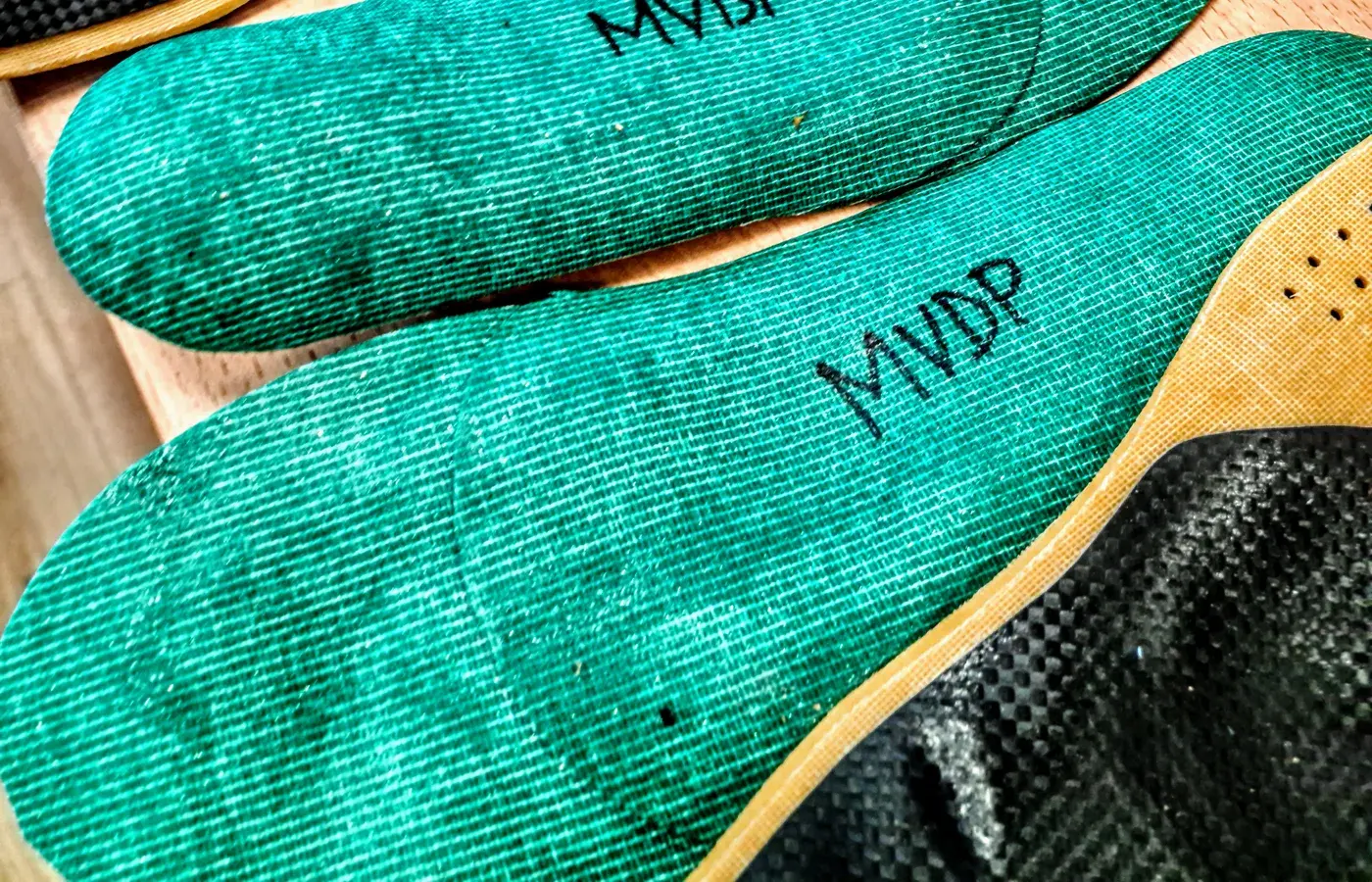
- too much pressure through the forefoot
- poor shoe fit, too little volume, or excessive tightening
- a cleat position sitting too far forward, which loads the ball of the foot harder
- no effective arch support, so the foot splays and collapses under load
- saddle height that makes you reach with a pointed foot
- unstable support higher up the chain that forces compensation through the feet
- longer or harder rides that expose a problem hidden at lower intensity
Two typical patterns: the long-ride build and the immediate squeeze
Some riders are fine for two hours and then lose feeling steadily, with both feet affected. That is the swelling and sustained-compression pattern, and it usually means shoe volume, fastening and support, plus how much of the ride is spent in one position without moving the feet.
Others feel it early, sometimes within twenty minutes, and often in one foot more than the other. That points at a mechanical mismatch instead: cleat position, stance width, or a foot that is being asked to stabilise something the rest of the position is not doing.
Can saddle height cause numb feet?
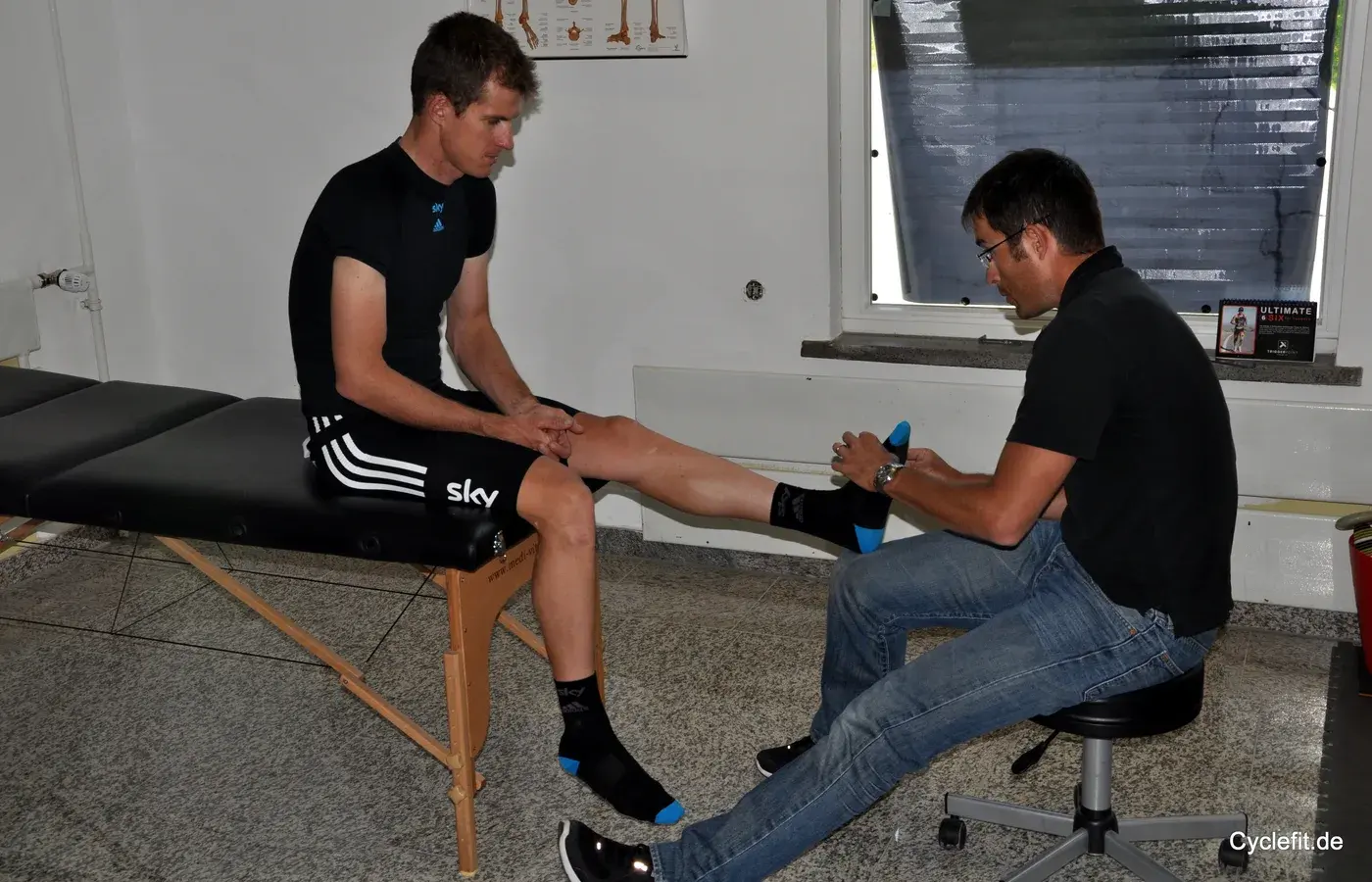
More often than riders expect, which is why it is worth its own answer. If the saddle is too high you reach for the bottom of the stroke by pointing the toes down, and that puts your weight forward onto the ball of the foot at the moment force is highest. The shoe never changes, but the load through the forefoot does.
A saddle too far forward can do something similar by shifting your weight ahead of the pedal axle. This is why moving cleats or buying wider shoes sometimes fails to help. If the position is putting the load on the forefoot, the forefoot keeps taking it whatever you wear.
What you can check yourself before you book
A few observations help me place the pattern faster. You do not need to fix any of this, just notice it on your next ride:
- Which part of the foot goes numb, and is it both feet or mainly one?
- How long into the ride does it start, and does it clear if you stop and loosen the shoes?
- Do you find yourself pointing your toes down at the bottom of the stroke?
- Do your shoes feel fine at the start and tight after two hours?
- Do you have to over-tighten the straps to stop your foot moving in the shoe?
None of this replaces an examination, but it usually already shows whether the shoe and cleat side or the position is the main story.
What I check and change during a numb feet bike fit
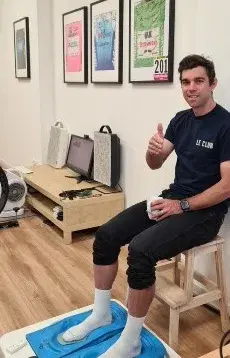
I look at the shoes, cleats, foot support, stance setup and how you are loading the pedals. I also look beyond the feet, because if you are unstable through the saddle or reaching too hard through the front end, the feet end up absorbing more strain than they should.
Typical levers are cleat position moved back to shorten the lever on the forefoot, effective arch support so load spreads across the whole foot instead of concentrating at the ball, shoe volume and fastening pressure, stance width, and saddle height where it is driving a toes-down stroke. The most useful step is usually not another guess, but a structured look at how the whole bike is loading the foot.
When a bike fit helps and when medical assessment still matters
A bike fit is most useful when the bike or riding position is part of the load causing the symptom. It does not replace medical assessment for numbness that persists off the bike, numbness that comes with back or leg pain, changes in skin colour that do not resolve, or symptoms not clearly linked to riding. Persistent forefoot symptoms can also have causes that no amount of fitting will address, and those are worth ruling out.
This page stays narrower than general foot pain because numbness is usually about sustained compression and disappearing support rather than only hot spots or burning pressure. The useful question is whether the setup concentrates load on the same small part of the foot on every ride.