Women cycling saddle pain needs proper analysis, not a stock answer. Many riders have already tried several saddles and still feel pressure, instability or friction. That is exactly why the whole setup needs to be reviewed, not just one component.
You work directly with me, Lloyd Thomas. I look at pelvic stability, pressure distribution, reach, saddle support and which position you can actually hold over time. The goal is not a generic women’s setup, but a position that suits your body, your bike and the type of riding you do.
Why women’s saddle pain is often more than a saddle issue
Discomfort rarely comes from saddle shape alone. Reach, pelvic control, saddle height, clothing, foot support and the way you stabilise yourself on the bike all influence whether pressure is distributed cleanly or not.
The mechanism that matters most is pelvic rotation. The pelvis is built to carry weight on the sit bones, which are designed for load. As you reach further forward and lower, the pelvis rotates and that weight moves off the sit bones onto the soft tissue in front of them, which is not designed for load at all. Almost every saddle problem is some version of this: too much weight in the wrong place, held there for too long.
This page exists because women riders are often told the answer is simply a women’s saddle, when the real issue can sit in the whole support system.
Soft-tissue pressure, sit-bone pain and chafing are different problems
Riders describe all three as saddle pain, but they point in different directions and the fix is different for each.
Pressure, numbness or aching at the front, in the soft tissue, is a position problem far more often than a saddle problem. It means your weight has rolled forward off the sit bones. Deep, bruised aching directly under the sit bones usually means the opposite: the saddle is too narrow or too soft to support them, or the saddle is too high and you are rocking side to side. Surface soreness, chafing and skin irritation are friction problems, which point at movement in the saddle, shorts, and how much you are sliding rather than sitting.
Common causes of saddle pain in women riders
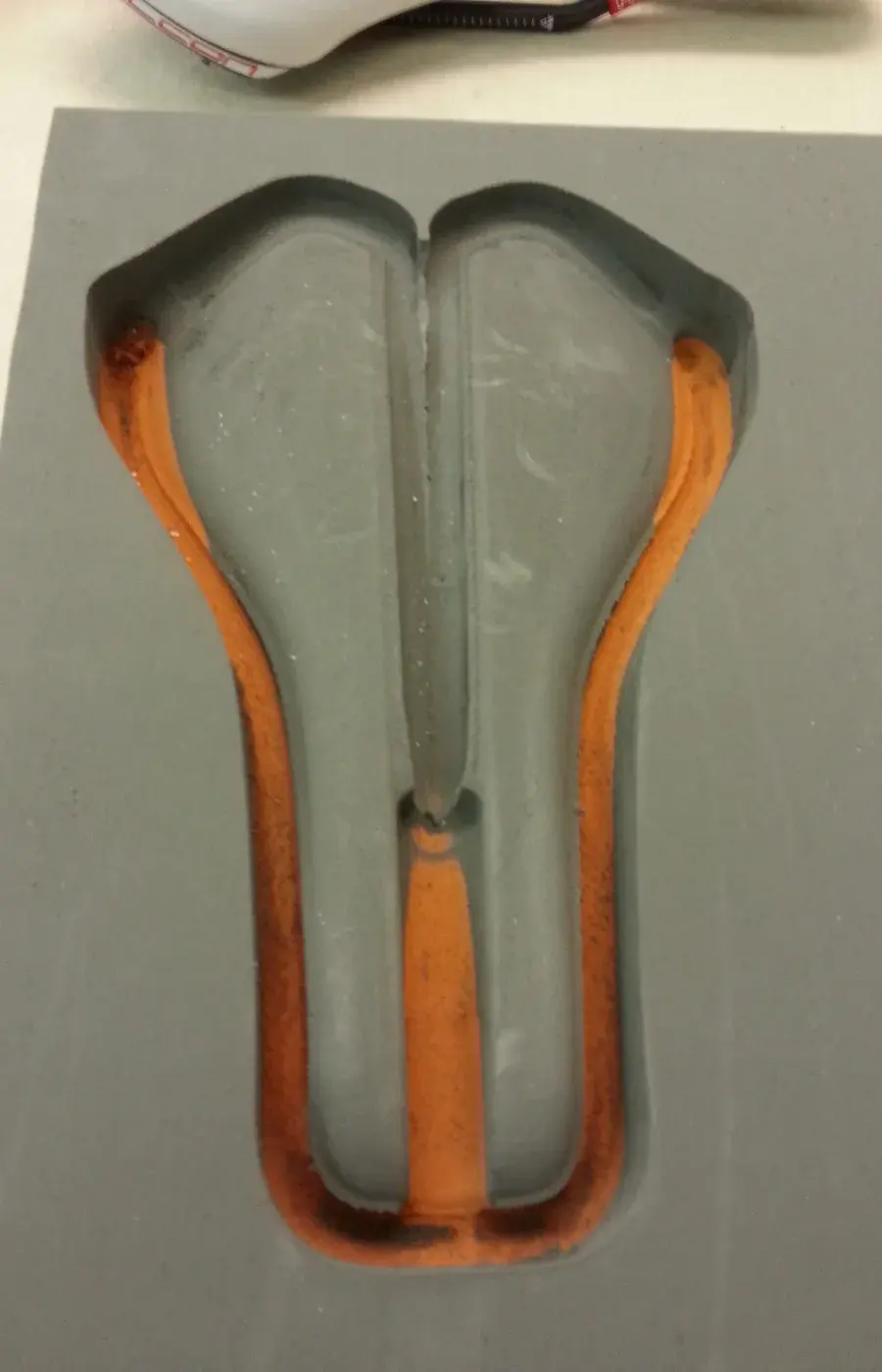
- reach or bar height that rotates the pelvis forward onto soft tissue
- saddle width that does not match your sit-bone spacing
- saddle tilt, especially nose-down, which slides you forward all ride
- saddle height too high, causing side-to-side rocking and friction
- padding that is too soft, so you sink through it and load the soft tissue
- limited pelvic stability under load, so the position is held by tension
- shorts, seams or worn chamois adding friction the setup then amplifies
Two typical patterns: pressure that builds and friction that accumulates
Some riders are comfortable for the first hour and then cannot get comfortable at all, shifting constantly, standing more often, or riding on the nose or the back of the saddle to escape. That is a pressure pattern and it usually points at position and pelvic rotation rather than saddle model.
Others have no single painful moment but finish every long ride with soreness, irritation or skin problems that take days to settle. That is a friction pattern and it points at saddle height, saddle width and how much you are moving on the saddle rather than being supported by it.
Does a women’s specific saddle fix it?
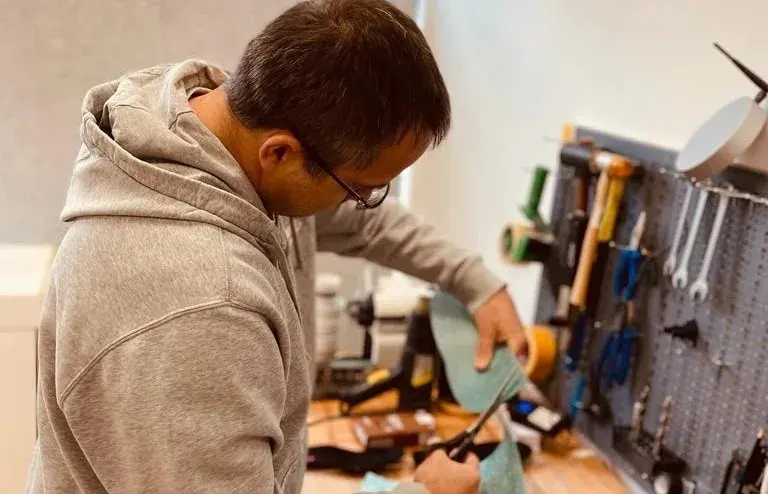
Sometimes, and it is a reasonable thing to try, but it is not the reliable answer the market suggests. A cut-out or a shorter nose relieves soft-tissue pressure only if your position already places you on the sit bones. If the reach is long or the bar is low, you rotate forward onto the soft tissue no matter what shape is bolted to the seatpost.
Sit-bone spacing matters more than the label on the saddle, and it varies far more between individuals than it does between the categories manufacturers sell. This is also why riders end up with a drawer full of saddles: each one is tested against the same unchanged position, so each one fails the same way.
What you can check yourself before you book
A few observations help me place the pattern faster. You do not need to fix any of this, just notice it on your next ride:
- Where exactly is the discomfort: at the front in the soft tissue, or underneath on the sit bones?
- Is it pressure and numbness, or is it surface soreness and rubbing?
- Do you slide forward and push yourself back repeatedly during a ride?
- Do your hips rock side to side when you look down, or when someone rides behind you?
- Is it worse in the drops or on the tops, and worse on long steady rides or short hard ones?
None of this replaces an examination, but it usually already shows whether position or saddle support is the main story.
What I check and change during the session
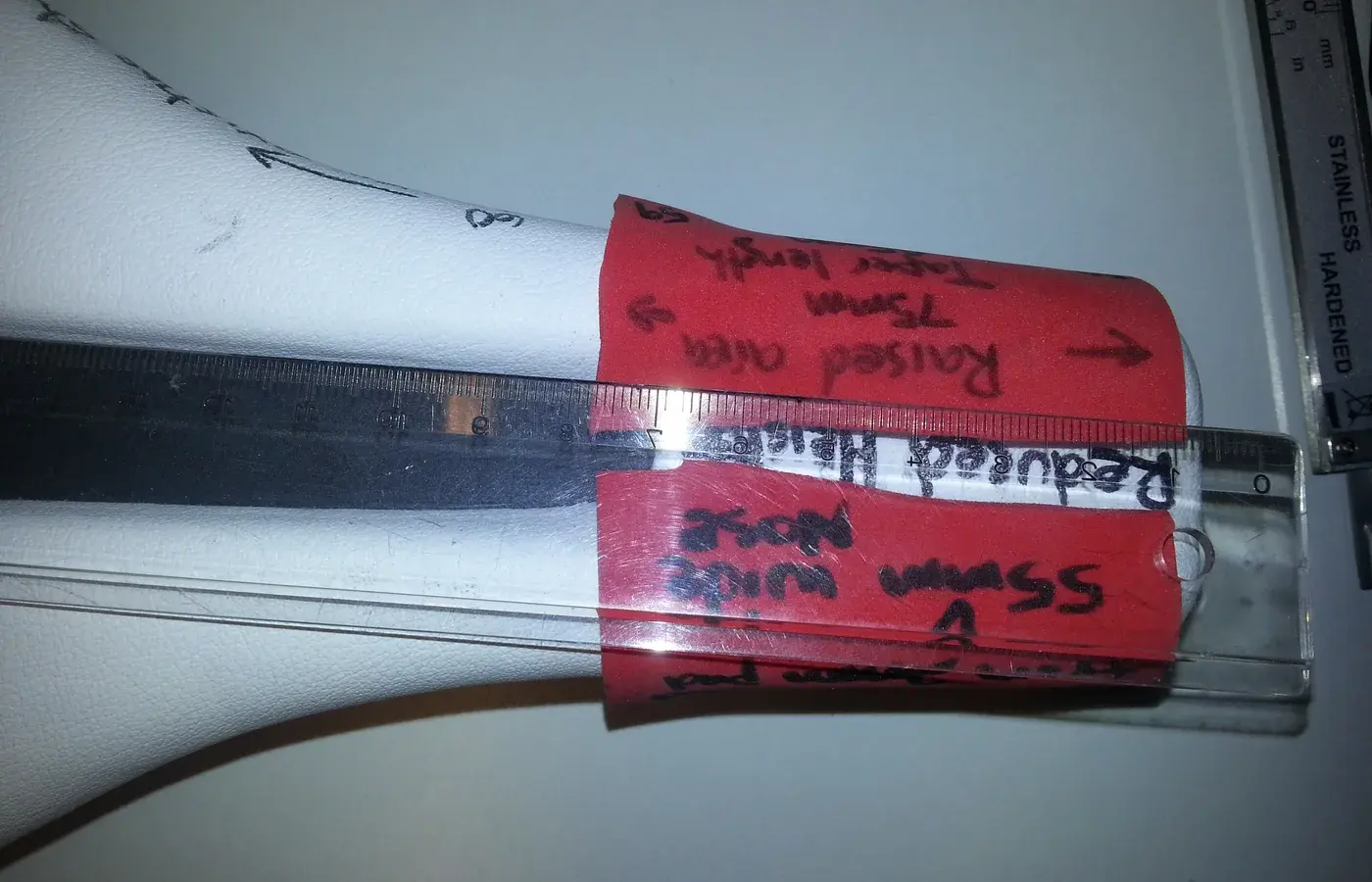
I start with movement screening and then analyse the position on the bike. I look at comfort, control, breathing, pressure distribution and whether the position can actually be supported without constant compensation.
Typical levers are saddle tilt and fore-and-aft position, saddle height where rocking is causing friction, bar height and reach so the pelvis is not forced into rotation, and saddle width matched to your measured sit-bone spacing. If a different saddle is the right answer, I say so. If the bigger issue is reach, stability or load distribution, we work there first, because a new saddle in an unchanged position usually repeats the same result.
When a bike fit helps and when medical assessment still matters
A bike fit is most useful when the bike or riding position is part of the load causing the symptom. It does not replace medical assessment for persistent numbness, pain that continues off the bike, swelling, recurring skin lesions or saddle sores that are not healing, or any symptom not clearly linked to riding. Genital numbness that does not clear quickly once you are off the bike is not something to monitor: stop riding that setup and get it checked. These are worth taking seriously rather than tolerating, and they are common enough among women riders that they are frequently left unmentioned and unaddressed.
A good solution should not only reduce pressure in one area. The useful outcome is a position that feels supported and sustainable instead of one that depends on constant adjustment or tolerance.